





Best Practices for Healthcare QA
Best Practices for Healthcare QA
Within the healthcare sector, quality is a critical factor towards keeping a healthcare organization afloat. Effective care delivery is heavily reliant on the quality and speed of execution. To address these two parameters, there have been significant and consistent innovations in the healthcare sector. While the industry progresses further along its digital evolution course, there is a heightened level of communication between patients, healthcare specialists, devices and data generation. This technological advancement of digitization brings with it the need for Quality Assurance (QA) and testing, which is integral to identifying the benefits of innovation, performing advanced analytics, making sound investments, and improving the overall performance of the healthcare software product. Accuracy and precision are impossible to achieve without a stringent system of QA and testing.
Core aspects
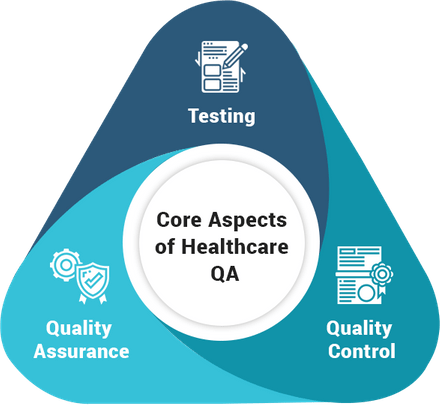
- Quality Assurance: This is the process of ensuring and maintaining quality consistency through a consistent process of performance measurement, which enables optimum performance levels of healthcare software products .
- Quality Control: A quality control process is the establishment of specific protocols that aid the healthcare organization to elevate the quality of service and care provided. Quality control programs prioritize the patient and ensure overall effectiveness.
- Testing: A method through which every enhancement and installation are rigorously tested to gauge performance quality and ensure smooth functioning. This process ensures that benchmarks are consistently met.
What are the Testing Challenges in Healthcare Application?
Challenge # 1: Addressing the Versatile Needs of Multiple Users
- Software usability needs to be holistic in its approach to address the requirements of one and all.
- A healthcare software application , for example, must address the specific needs of patients, caregivers, insurers, administrative staff and every other stakeholder involved. The testing process, therefore, has to be approached from multiple angles to ensure overall usability. At the outset, QA specialists need to comprehend and analyze basic and specific user requirements. For example, a patient’s requirement may be to track health progress on their mobile application, an insurer may look to track patient records and claims, a physician may require consistent reviews of treatment progress, and administrative staff may need to automate office processes.
- Each requirement can be tested separately or holistically for overall satisfaction.
Challenge # 2: Setting the Standard for Security
- Compliance with Health Insurance Portability and Accountability Act (HIPAA) is not only mandatory, but a sure shot method to keep software safe and maintain security protocols.
- Primarily, HIPAA is a regulatory requirement that concentrates on the security and privacy of all health-related data, but also requires specific domain knowledge from QA specialists. Every QA procedure needs to be thoroughly HIPAA compliant with this act and comprehensive knowledge of it is an important requirement during QA and testing.
- Areas, such as authenticity and authorization, accessibility and data usage, encryption and transfer protocol, auditing and structuring are all essential components of testing towards HIPAA compliance. If the standard is set towards HIPAA compliance, the quality specialists can rest easy knowing that security standards are satisfactorily met.
Challenge # 3: Interoperability Standards and Process Adherence
- Data transfers are required to comply with certain standards, such as Fast Healthcare Interoperability Resources (FHIR), Health Level Seven (HL7), and Digital Imaging And Communications In Medicine (DICOM). These standards range across data transfers between mobile applications, standard stations, EHR systems , etc.
- FHIR is a standard framework to simplify interface building with Application Programming Interface (API). For effective operation, this standard has to be widely adopted across multiple applications within the organization. HL7 is a standard requirement for the exchange, retrieval and merging of health data that ensures data transfer is accurate, through comprehensive testing of communication modules with tools like MQF Validation Tool, NIST Message Validator, Message Workbench, etc. Finally, DICOM is an international standard for efficient and safe medical image viewing, storage, processing, sharing, and analysis.
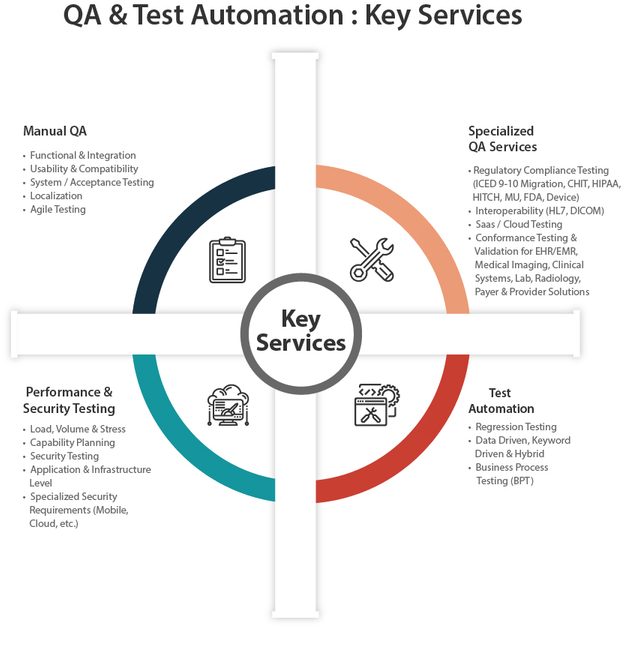
Types of Healthcare QA
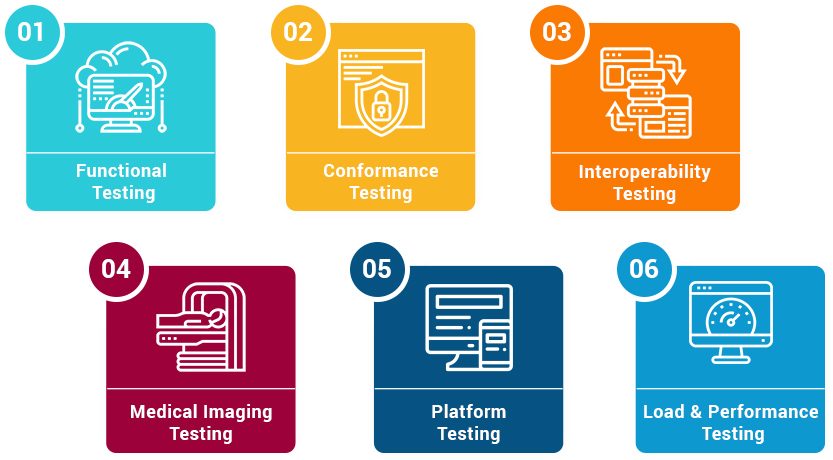
1. Functional Testing
This form of testing addresses the functional capabilities of healthcare applications , including testing of healthcare workflows across the enterprise through Integrated Health Enterprise (IHE) that works to improve information sharing processes.
2. Conformance Testing
Testing conformance to healthcare industry frameworks and security requirements (eg Meaningful Use, HIPAA, FDA requirements, VA requirements) come under conformance testing that ensures security protocols are met.
3. Interoperability Testing
Another form of conformance testing is the measurement of interoperability standards (eg HL7, FHIR, DICOM, NCPDP, CCD / CDA) by using industry-standard testing tools. This is a measure of the security levels adopted during data exchange, according to regulatory requirements.
4. Medical Imaging Testing
The security and accuracy of the medical imaging software are adopted through testing medical imaging applications, including specialized test automation tools for medical imaging, such as MESA, DVTK, and Mirth.
5. Platform Testing
This includes the rigorous testing of software on mobile platforms and mobile applications for iOS, Android, Windows, etc. Another dimension of testing is the measurement and effectiveness of cross-browser compatibility.
6. Load and Performance Testing
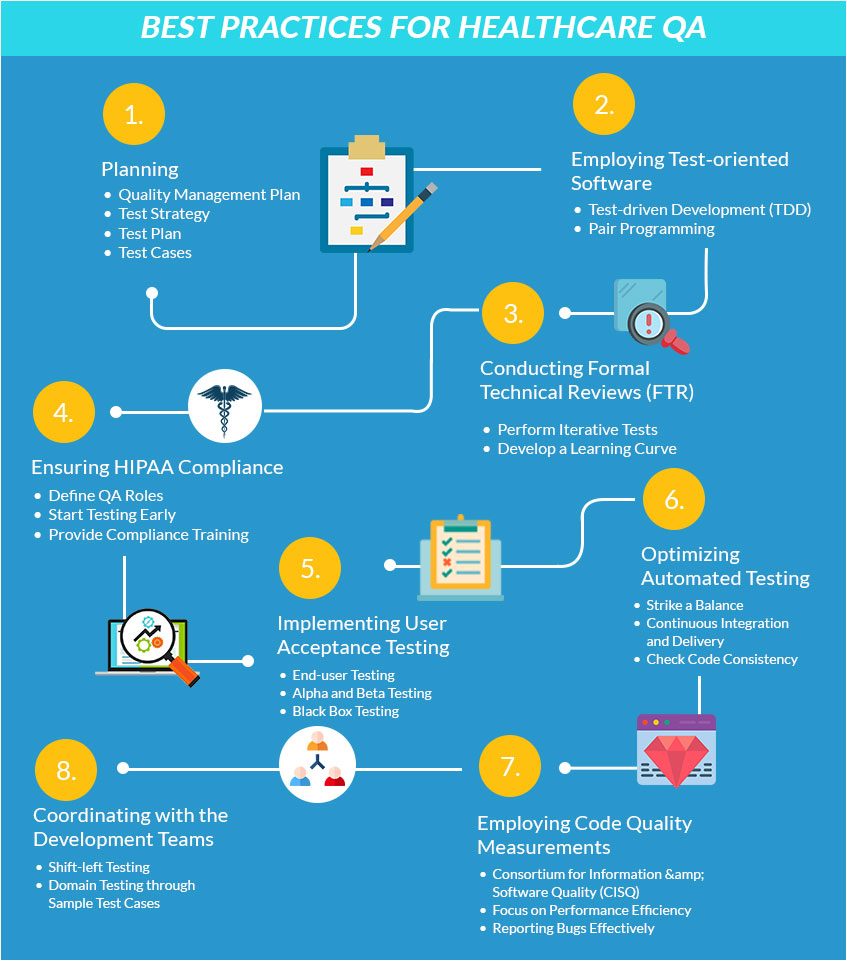
Testing enterprise healthcare applications against load and performance benchmarks through leveraging cloud platforms, such as Azure, Amazon EC2, and Google to ascertain the capability of managing load and performance output. 1. Planning: 2. Employing Test-oriented Software 3. Conducting Formal Technical Reviews (FTR) 4. Ensuring HIPAA Compliance 5. Implementing User Acceptance Testing 6. Optimizing Automated Testing 7. Employing Code Quality Measurements 8. Coordinating with the Development Teams Conclusion: Adopting agile techniques, compounded with the simultaneous association of developers, business experts, and QA specialists will improve efficiencies across the organization and provide higher quality healthcare software products . This model of integration and the adoption of smart testing methods reduce gaps and increases end-user satisfaction through cross-functionality. This model of integration and the adoption of smart testing methods reduce gaps and increases end-user satisfaction through cross-functionality.
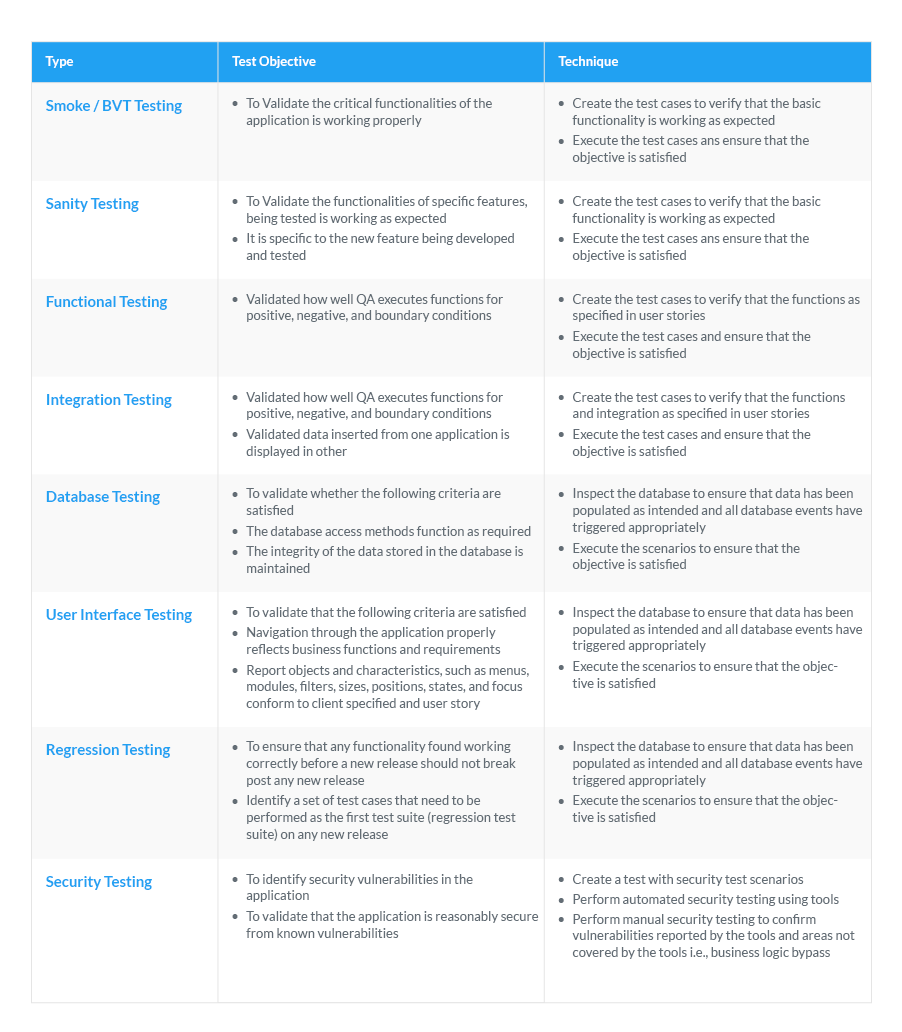
Best Practices for Healthcare QA
Can BA / QA integration transform Modern Healthcare Development?